(208) 344-2508
Construction
Aerial and Underground Equipment
Alloway Electric is a qualified electrical contractor who can install structured wiring in buildings and also install outside underground and aerial cable.
The underground construction methods used vary with job specifications and site conditions.
Horizontal directional drilling is perfectly suited construction in areas where excavation is inconvenient, impractical or impossible. And while horizontal directional drilling is widely used, a surprising amount of the underground construction continues to be completed the old-fashioned way—with trenchers, vibratory plows, loader-backhoes, compact excavators and skid-steer loaders with attachments. Although attracting little attention, the relatively simple and inexpensive technique of making trenchless installations with pneumatic piercing tools is being used on many projects.
Horizontal directional drilling
Directional drilling permits the underground installation of telecommunications duct with a limited amount of excavation. It permits network segments to be installed in areas with surface improvements and in already-crowded easements with little disturbance to landscaping and paved surfaces. Reducing the high restoration costs required after open-cut construction usually more than offsets the higher per-foot cost of Horizontal Directional Drilling.
These benefits are perfectly suited to conditions found on many telecommunications projects.
Most pilot bores are surface-launched, requiring little or no excavation. Pit-launch models usually are used when a job site is too small to allow surface launches. The compact drill frame is lowered into a pit and initiates the pilot bore at the required depth. A separate power source is positioned on the surface near the pit.
Pneumatic piercing tools
Piercing tools, also called moles, have been in use for years, providing an economical method for making short compaction bores under sidewalks, driveways and other surfaces.
To make an installation, a tool is placed in a starting pit or trench, is connected to an air compressor and literally pounds itself through the ground.
Excavation
-
Trenchers: When surface damage is not an issue and there are no existing buried utilities at the job site, digging trench, putting duct or cable in it and returning spoil to the excavation is a fast, economical method of underground construction. Trenchers dig continuous, narrow trenches, depositing spoil on either one or both sides for fast restoration.
-
Loader-backhoes: Although much slower than a trencher, tractor-mounted loader-backhoes are widely used to dig trench. Even though the width of the bucket is much larger than needed for a telecom installation, a backhoe on-site is employed rather than bringing a trencher to the job.
-
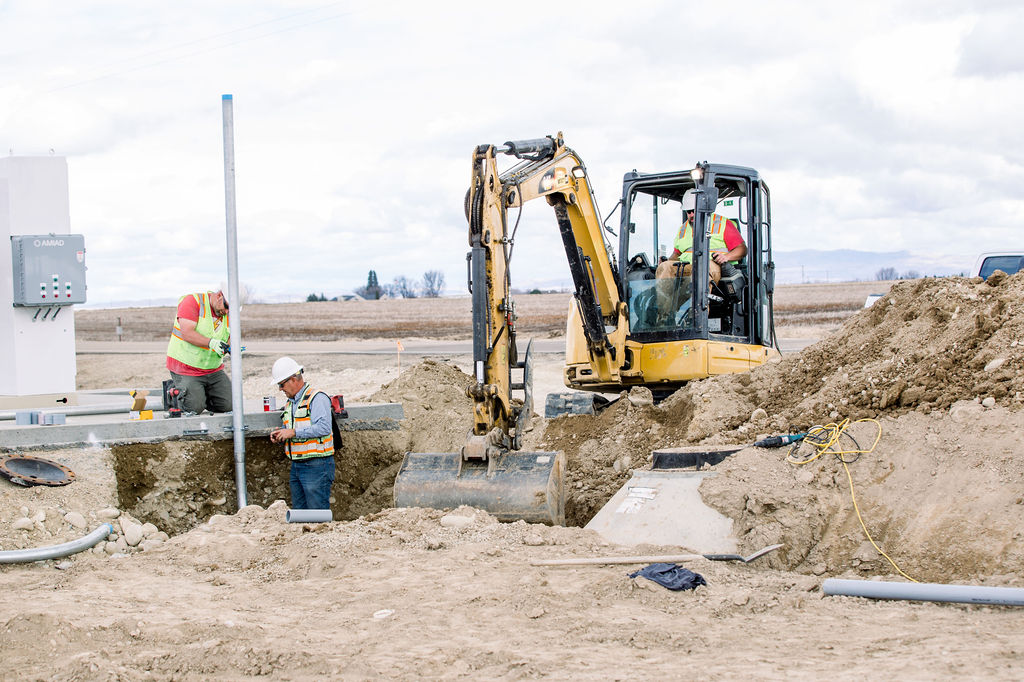
Compact Excavators: In the past few years, compact excavators have done a growing amount of utility work. Unlike a full-sized excavator, compact models can dig offset trench adjacent to streets, fences, buildings and other obstacles. With a variety of attachments, they also can do numerous other tasks. Track-mounted compact excavators can work on a variety of terrain and in wet conditions where wheeled equipment is difficult to use.
-
Skid-steer loaders: Today’s skid-steer loader models are multipurpose tool carriers with an array of attachments that include several perfectly for utility projects, including trencher, backhoe, vibratory plow, pole-digger auger and tampers. Wheel-mounted skid-steers turn on a dime and can move quickly from place to place on the job site, also performing many other jobs. Track-mounted mini skid-steer loaders can work in confined spaces and in wet areas where wheeled equipment cannot operate